Introduction
Forced Induction refers to any method of compressing, or “forcing”, more air into the combustion chamber and is arguably the greatest automotive invention of all time. The additional air forced in is called “boost” and is measured as how much greater the pressure of the compressed air is than that of the atmosphere.
In today’s world there are two main methods of forced induction, the supercharger and the turbocharger (AKA turbo), the latter of which is the focus of this article.
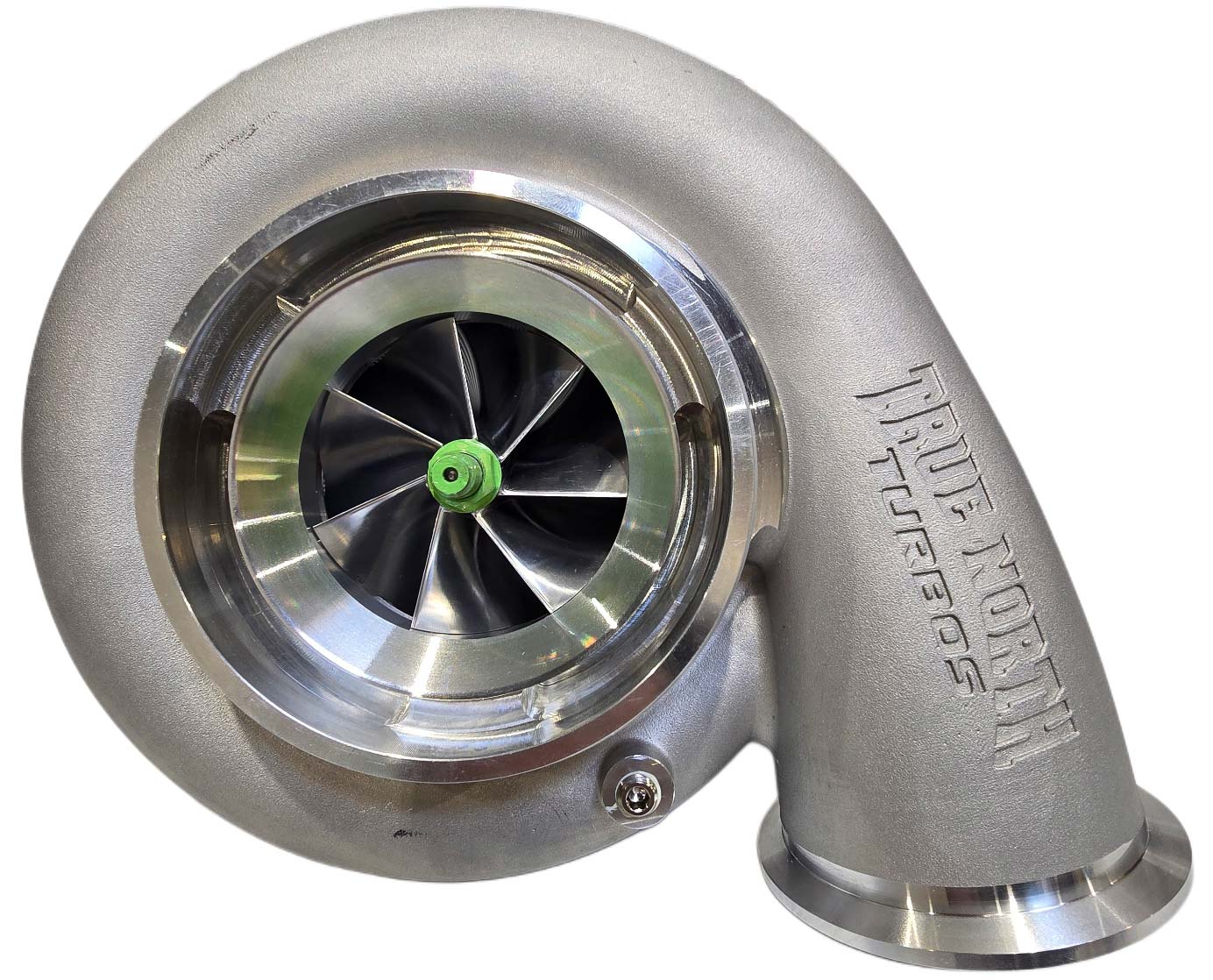
A turbocharger is comprised of a turbine (AKA hot side) and a compressor (AKA cold side) that are connected by a shaft. The turbine is a blade that is spun by exhaust gasses, and since they are connected, the compressor also spins when the turbine spins.
As the compressor spins it compresses air into the combustion chamber of the engine. Therefore, as the engine produces more exhaust gasses (achieved by reaching higher RPM), the turbine spins faster, which means the compressor spins faster and compresses more air into the combustion chamber allowing the engine to make more power.
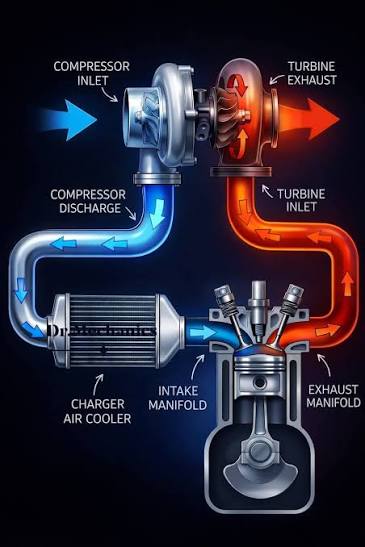
Now at this point you may be wondering why does more air equal more power, and that’s a fair question. Inside your engine a chemical reaction called combustion is occurring, fuel is injected and ignited, and the resulting explosion is what creates power for the engine. A bigger explosion means more power, and to get a bigger explosion you need two things: more fuel and more oxygen. Getting more fuel isn’t too hard, we can use bigger injectors, but getting more oxygen in there a bit trickier, and forced induction is the solution. So a turbocharger gets more oxygen into the engine which allows for bigger explosions thus more power.
Turbochargers can also increase an engines efficiency to a certain extent. Before forced induction became popular, the only way to make more power was to have a larger engine (instead of bigger explosions we would have more small explosions through more/bigger cylinders).
Turbochargers allowed for a smaller engine to make the same amount of power as a larger engine when needed. As stated above, turbochargers need the exhaust gases of the engine to flow quickly to help the engine make more power. So a small engine with a turbocharger can make the same amount of power as a larger engine at higher RPM while consuming much less fuel at lower RPM than the larger engine.
Finally, when speaking about turbos there are two important terms that we should define: Boost Threshold and Turbo Lag.
Boost Threshold: The minimum engine RPM required for the turbocharger to produce “boost”. Here “boost” refers to positive pressure or pressure greater than atmospheric (14 atm) created by the turbocharger in the crankcase. If your turbocharger is producing less pressure than the atmospheric pressure, then it isn’t helping the engine make more power, the engine is essentially operating as if it were naturally aspired. Only once you pass the RPM (the boost threshold) that the turbo starts producing boost at will the engine make more power than an identical naturally aspirated engine.
Turbo Lag: This is the lag experienced after you hit the throttle when you are at or above the boost threshold. After you hit the throttle, the turbocharger does not begin to produce boost immediately, this takes time, hence the term turbo lag. Recall that the turbocharger is powered by exhaust gasses, when you hit the throttle fuel needs to be injected, fresh air must enter, then the mixture must be ignited, and then the exhaust gasses are pushed out. This process creates a short lag in between when you hit the throttle and feel the car deliver power. This lag typically increases as the size of the turbocharger increases.
Brief History
1885: The first concept of a turbocharger appeared, thought up by Gottlieb Daimler. Daimler patented a gear driven pump to force air into an engine. Superchargers had already existed for years at this point, and this was the first time a new method of forced induction was being proposed.

1905: Alfred Buchi patented what is largely considered to be the first turbocharger. The patent was for an engine that had an exhaust driven turbine connected to a compressor wheel.
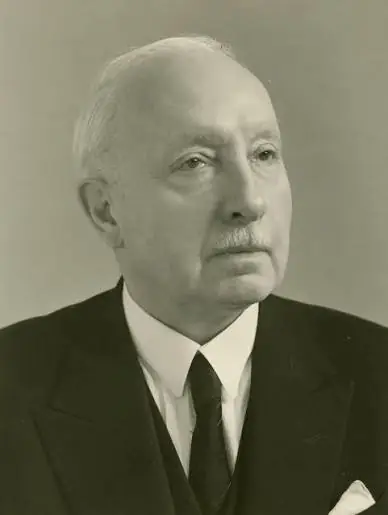
1915: The first prototype was built, and the goal was to use it to overcome the power loss experienced at higher altitudes caused by reduced air density. Unfortunately, the prototype never made it to production due to reliability issues.
1917: The National Advisory Committee for Aeronautics (NACA) proved that adding a turbocharger to an engine would allow it to make the same amount of power at 4250 meters above sea level as it would at sea level. Effectively proving that the turbocharger could overcome the power loss that occurs at higher altitudes.
1920-1925: First commercial application of the turbocharger appeared on two passenger ships owned by the German Ministry of Transport. Alfred Buchi installed turbochargers on the 10-cylinder diesel engines, increasing their power output from 1750 horsepower to 2500 horsepower. The design was licensed to several manufacturers and turbochargers started to become used in boats, trains, and engines not used for transportation. Turbochargers were also used on several aircrafts during WW2.
1930s: Turbochargers started to become more mainstream with the Swiss truck company Saurer offering optional turbocharging of their BXD and B2D engines.
1950s – Early 60s: Car manufacturers tried to introduce the turbocharger into passenger cars but faced two problems. They couldn’t overcome turbo lag, and the turbocharger was too bulky for the engine bay.
1968: First major win for the turbocharger in motorsport comes at the 1968 Indy500. The engine of the winning car was turbocharged, and winning engines continued to he turbocharged for years to come.
1973: The Oil Crisis occurred and the price of fuel skyrocketed. Up until this point many people looked down on turbos and believed that they were unnecessarily complicated and expensive for the efficiency and performance gains they offered. However, the rise in fuel prices and progression of technology made the efficiency of the turbocharger much more appealing to most.
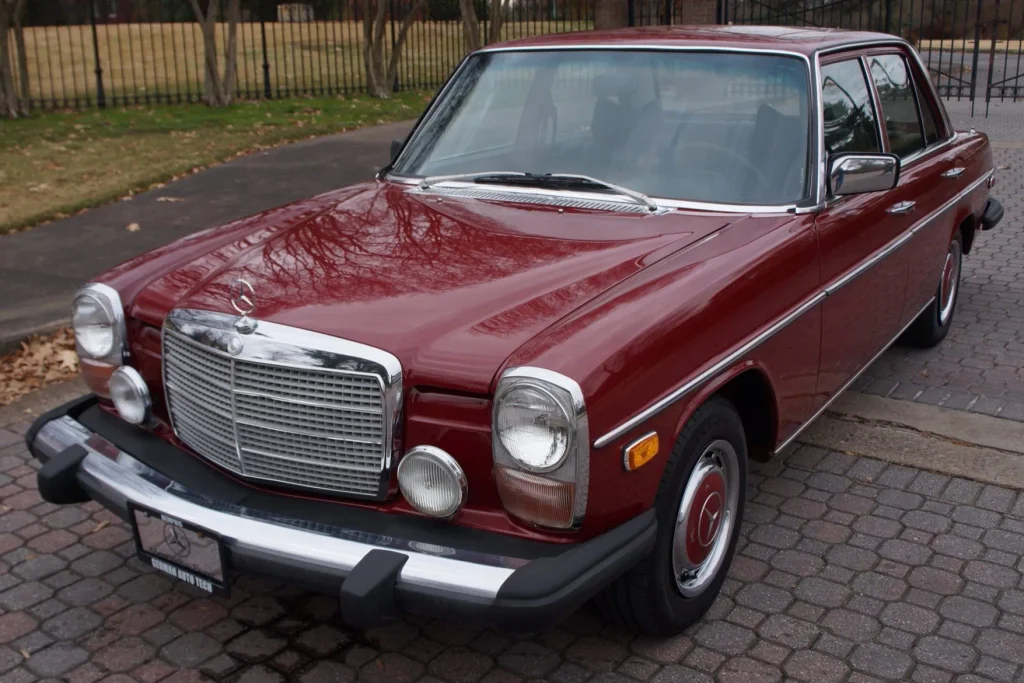
1973 – 1975: The first turbo-diesel passenger cars appeared. The Mercedes 300D spurred greater adoption of turbochargers in the global market.
1976: Porsche begun to mass produce turbochargers and fit them to many of their engines, like the flat 6 from the 911. Porsche went on to win the World Sportscar Championship and 24 hour Le Mans with turbocharged engines in 1976.
1980s: More turbochargers begun appearing within the consumer market as manufacturers started to use them to get smaller engines to produce the same power as larger engines while being more fuel efficient.
Alas, we are now encroaching upon present day, and our brief history has been completed.
Current State
The present-day turbocharger has evolved significantly from its earlier predecessors and comes in many different forms. We have twin scroll turbos, hybrid turbos and even multi-turbo setups now. This section will aim to provide an overview of some modern turbocharger technologies.
Twin Scroll Turbocharger
The cylinders in an engine don’t fire all at the same time, there is a firing pattern / order. For example, cylinder 1 may fire first, followed by cylinder 3, then 2, then 5 and so on. Because of this exhaust gases are produced in pulses, and without proper shielding exhaust pulses and interfere with each other. That is essentially a fancy way of saying that the exhaust gas pulses can bounce off each other and lose energy that could have otherwise been transferred to the turbocharger.
A single scroll turbo takes in the exhaust gases from the engine through a single pipe. This is somewhat inefficient because it allows the pulses of exhaust gases to interfere with each other before reaching the turbine, which results in the energy loss mentioned above.
A twin scroll turbo has two separate channels for exhaust gases to travel through. Each channel groups together cylinders that fire together, which prevents differently timed exhaust pulses from interfering with each other. Therefore increasing efficiency over a single scroll turbo as it allows for more energy to be transferred from the exhaust gases to the turbine.
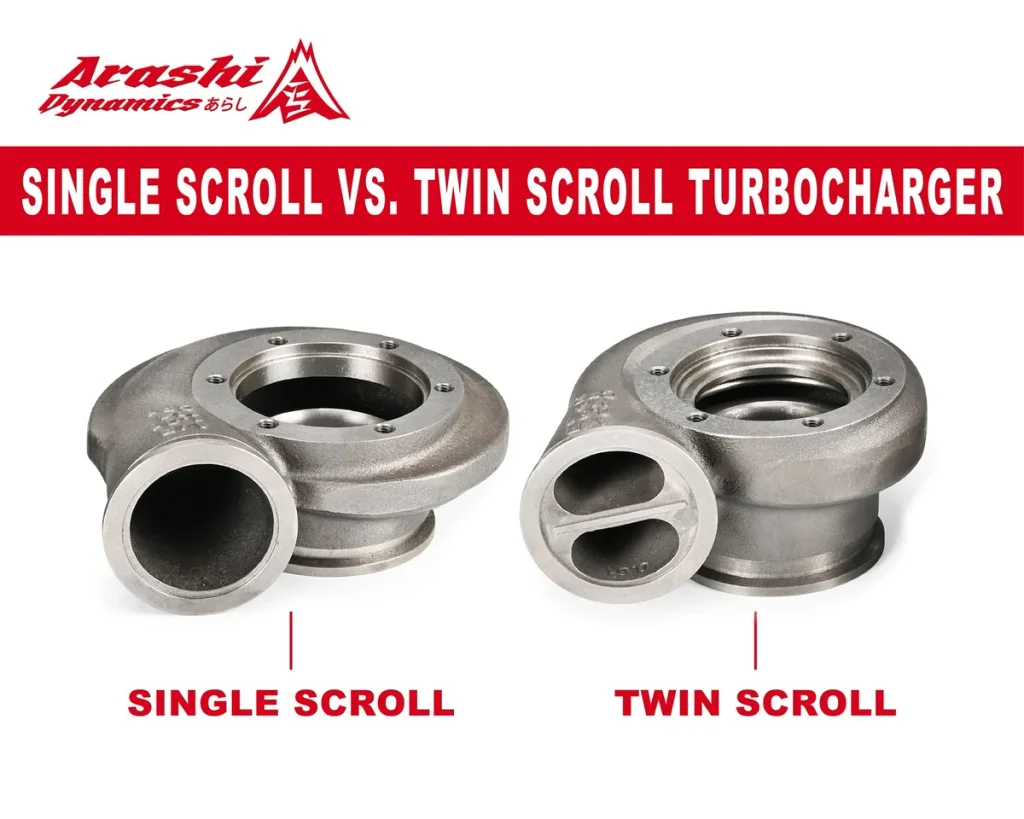
The two channels can also be different sizes. One may be smaller which will optimize it for delivering boost at lower RPM (smaller channel increases the pressure of the gas which spins the turbine faster) and one may be larger to optimize for flow at higher RPM (at higher RPM the exhaust gases are flowing faster and a smaller channel becomes restrictive).
Variable A/R (Aspect Ratio) Turbo or Variable Geometry Turbo (VGT)
The aspect ratio of a turbo is computed as the area of the turbine housing (A) divided by the radius of the center of the turbine to the center of the turbine housing (R).
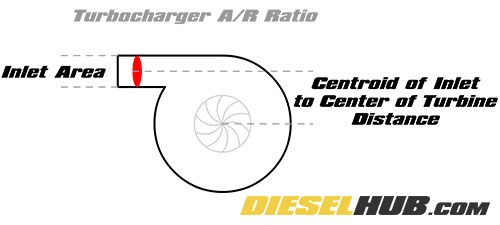
A lower aspect ratio implies a smaller turbine housing; this turbo will spool faster and therefore reduce turbo lag. It will offer great low-end power but have limited top end power.
A larger aspect ratio implies a larger turbine housing; this turbo will take longer to spool which increases turbo lag. It will offer significant top end power but limited low end power.
A variable aspect ratio turbocharger has the ability to change its aspect ratio in real time. It achieves this using internal valves and veins that can contract and expand. At lower RPM these veins will contract to lower the aspect ratio, allowing maximal low-end power to be delivered. At higher RPM the veins will expand to increase the aspect ratio, allowing maximal top end power to be delivered.
The Porsche 911 and 911 Turbo S have used variable aspect ratio turbochargers since 2006 (997 generation).
Electrically Assisted Turbocharger
These turbochargers include a small electrical motor that is used to help the turbo spin/spool faster at lower RPM. At lower RPM the engine is usually operating below the boost threshold because it isn’t producing much exhaust gases. The electric motor assisting the turbo in this case significantly lowers the boost threshold as well as reduces turbo lag.
Twin / Multiple Turbochargers
Twin turbocharger setups are very common in today’s world, with multi-turbo setups also making a few appearances (the quad-turbo setup in Bugatti’s W16 for example). There are several different ways that multi-turbocharger systems can be setup, and below I’ll discuss the most prominent methods. For the sake of simplicity, I’ll be discussing these setups assuming that there are only two turbochargers, but the concepts can be extrapolated out to larger setups.

Parallel
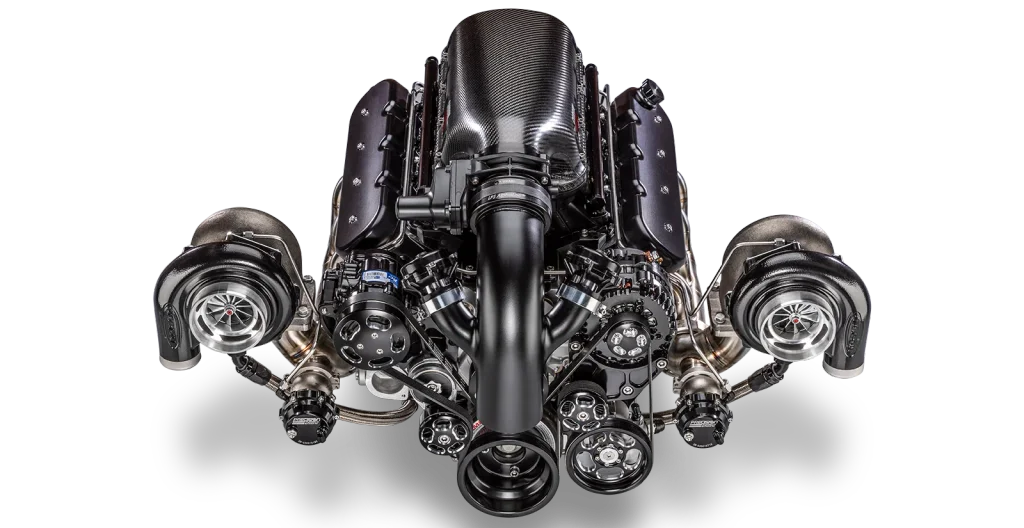
This setup involves two (or more) identical turbochargers each responsible for half of the engine’s cylinders with either a shared intake manifold or separate intake manifolds for each turbocharger. Parallel turbos are particularly common in “V” engines due to their natural symmetry. Furthermore, smaller parallel turbos can produce the same amount of power as a single large turbo while reducing both the boost threshold and turbo lag, since smaller turbos can spool faster.
Series / Compound
This setup has the turbochargers set up as a chain leading up to the engine such that the output of one turbocharger is the input of another, and the output of the final turbocharger feeds the engine. For example, let’s say that each turbo can make the input air three times denser, so the first turbo compresses air to 3 times denser than the atmosphere, and then the second turbo receives this compressed air and compresses it three more times, so the output of the second turbo is air that is 9 times denser than the atmosphere.
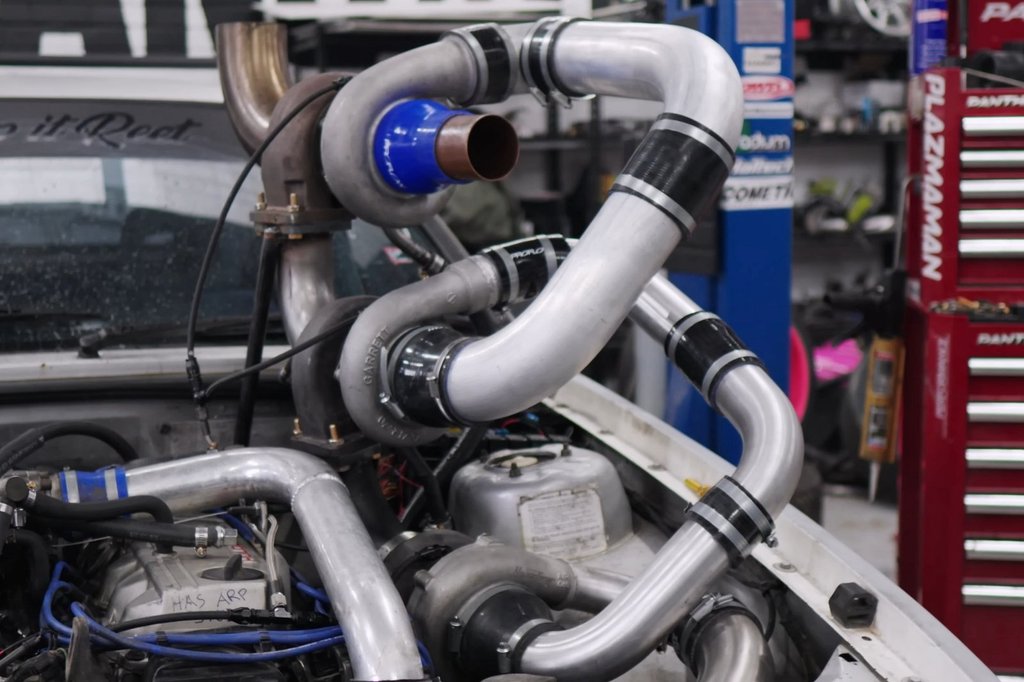
This setup is particularly useful at higher altitudes (in aircrafts that use piston engines) where the air isn’t very dense, so high levels of compression are needed.
Sequential
This setup uses two different sized turbochargers, a smaller turbo for lower RPM and a larger turbo for the higher RPM. The smaller turbo can spool very quickly, which provides power at lower RPM, but lacks the flow needed to provide power at higher RPM. The larger turbo takes longer to spool so it can’t provide power at lower RPM, but it has the flow needed to provide power at higher RPM.
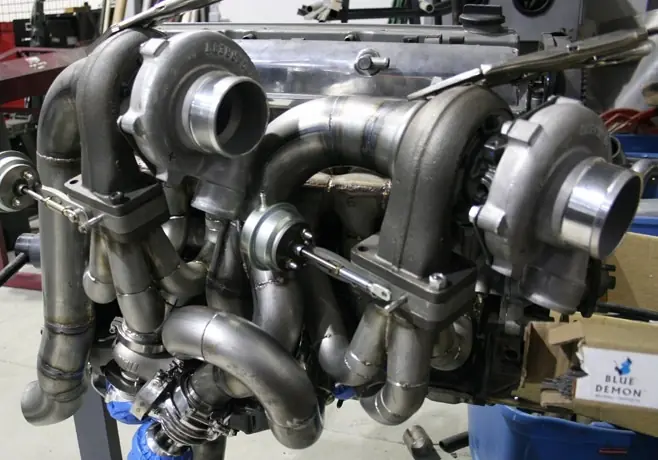
More advanced versions of this setup also can divert the exhaust gases between the turbos to maximize their respective strengths. At lower RPM the exhaust gases will be routed to the smaller turbo as the larger one can’t make much power, then as the RPM climb some gases are diverted to the larger turbo to help it begin to spool and at high RPM all gases are sent to the larger turbo as the small turbo can’t make much power.
Hybrid Turbocharger
This is an upgraded turbocharger that serves as a direct replacement for the factory turbo in a car, a hybrid turbocharger typically retains the same size and shape as the factory turbo but contains upgraded components (bigger compressor, upgraded turbine, upgraded bearings, bored out housings, etc.). This allows for the hybrid turbo to be installed using the factory mounting points and hardware, whereas a new turbo that wasn’t designed for the car would require new oil lines, manifolds, piping, etc.
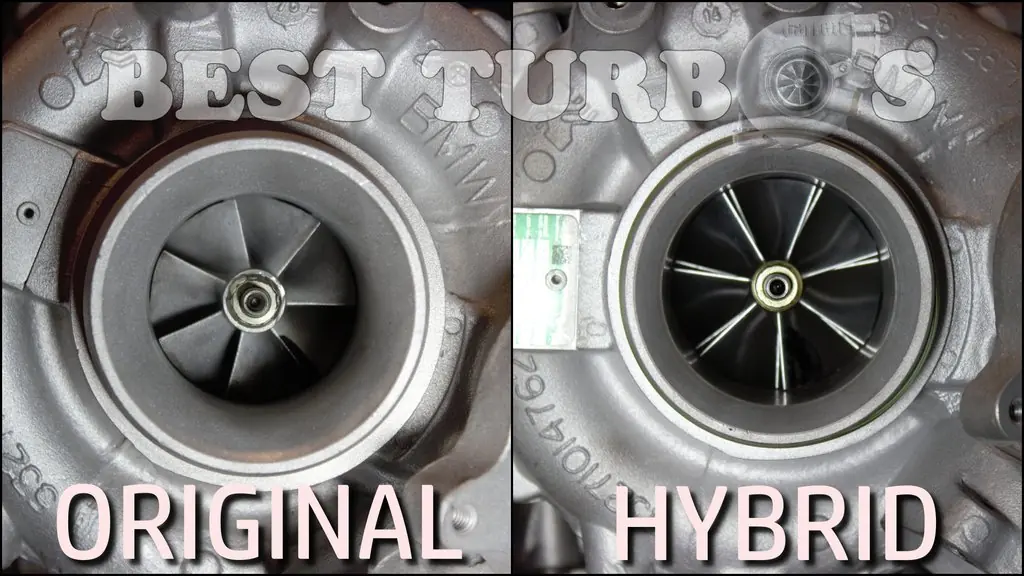
The hybrid turbo allows for significant performance gains over the factory turbo with very minimal modifications required (provided that the platform has headroom to make more power). Examples of platforms that benefit from hybrid turbos are the B58 and EA888, both of which are capable of making more power in their mostly stock forms.
Future State
So far, we’ve talked about the both the past and present of the turbocharger, but what about its future? I don’t think that the turbocharger is going anywhere anytime soon. In fact, I think that it is going to be the savior of the internal combustion engine.
Let’s take a step back and look at the current state of the automotive industry – we are witnessing a huge push for efficiency gains primarily driven by tighter emissions restrictions. Because of this, we are seeing hybrids and EVs pop up everywhere, sometimes in places we least expected them to.

While this isn’t inherently a bad thing, it does beg the question of what the future holds for the internal combustion engine. Will it survive into the next decade? Or will it be entirely replaced by electric systems? I think the former is true if the turbocharger has anything to say about it.
Manufacturers are being aggressively pushed to produce vehicles that are more efficient than ever, hence why many have opted to pursue either hybrid or fully electric systems. Manufacturers who wish to continue using internal combustion engines are faced not only with the challenge of increasing efficiency, but also simultaneously increasing power to contend with the instant torque delivery of electric systems.
The turbocharger is the only thing left in arsenal of the internal combustion engine that can deliver both performance and efficiency gains at the same time. We’ve already witnessed two automotive manufacturers that are seemingly simultaneously different and similar use this approach.
Honda is known for its high revving, naturally aspirated 4-cylinder motors that are nearly indestructible. The best of these motors were typically found in the performance level trims of the Civic in recent years, though not too recently. As of roughly 2017 Honda replaced many of their beloved naturally aspirated motors with smaller turbo motors. The turbochargers allowed for the motors to be smaller and consume less fuel while offering the same (or more) power than the larger naturally aspirated motors.

Lamborghini is known for its high revving, large, naturally aspirated V10 and V12 motors. The brands new entry model, the Temerario, features a twin turbo V8, as opposed to the naturally aspirated V10 found in its predecessor, the Huracan. Once again, this change allows for a smaller turbocharged engine to match the power of a larger naturally aspirated engine while being more efficient.
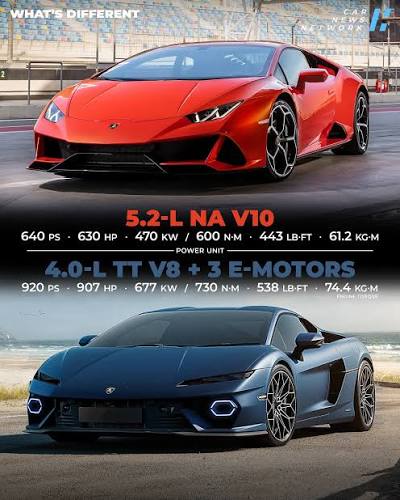
Of course, Lamborghini and Honda are merely two examples that I chose to present of what is a rising trend within the industry. So given that the following three statements are true:
- Some manufacturers aren’t ready to give up the internal combustion engine yet,
- Internal combustion engines must become both more efficient and more powerful to compete with electric systems, and
- The turbocharger is the only tool we have that can both increase power and efficiency simultaneously
I think it’s safe to say that not only is the turbocharger not going anywhere, its future is also very, very bright.
Sources: CarBuzz, MotorTrend, Wikipedia, Turbo Aspect Ratio, Lamborghini