Introduction
AMG and Mitsubishi are two extremely well-known names within the automotive industry; both have repeatedly impressed the community and delivered legendary cars. AMG has created some of the most brutally powerful and monstrous cars, ever. While Mitsubishi has given us some of the greatest rally cars ever and created one of the best 4-cylinder engines of all time, the 4G63.
Did you know that these two titans have crossed paths not once, but twice? Once to create the AMG Debonair, and a second time to create the AMG Galant, the latter of which is the focus of this article.
Mitsubishi & The Galant
Mitsubishi originated in 1870 as a shipping company that was founded by Iwasaki Yataro. In the years following its creation, Mitsubishi diversified itself by operating in several different industries, including coal mining, shipbuilding, iron milling, marine insurance, aircraft manufacturing, and more.
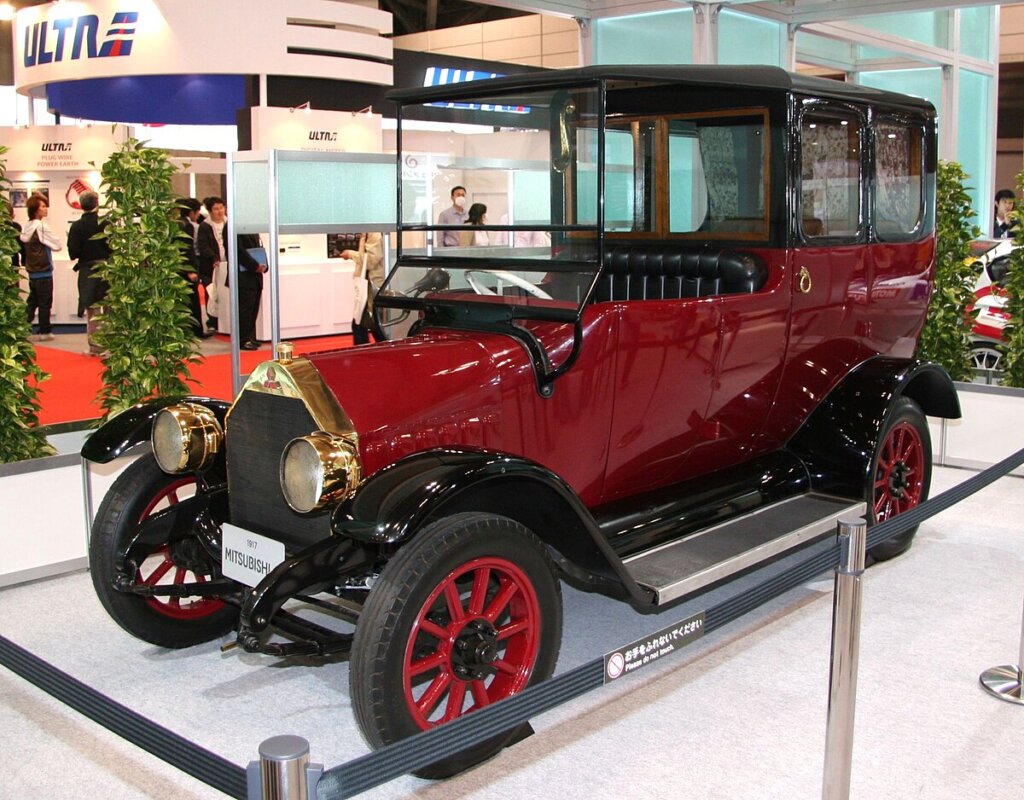
It wasn’t until 1917 that Mitsubishi would enter the automotive scene, and when they did, they gave Japan it’s first production automobile – the Mitsubishi Model A. The Model A came with a whopping 35 horsepower and could reach a top speed of 97 km/h, eventually. It was based on the Fiat Tipo 3 and only 22 were produced before it was discontinued.
In the 1990s we saw Mitsubishi produce many more models, with some of the most popular being the Lancer, Galant, Pajero and Debonair. For the purposes of this discussion, we will pay special attention to the Galant.
The Galant debuted in 1969 and was produced until 2012, iterating through 9 different generations. It was a mid-size sedan primarily competing with cars like the Honda Accord and Toyota Camry. The sixth generation, known as the E30, was produced from 1987 to 1992 and is quite special.
For starters, it was the first production car in the world to have semi-active electronically controlled suspension (added to the 1987 model). The 1987 model year was awarded “Car of the Year Japan” and the 1989 model year was named “Motor Trend’s Import Car of the Year”.
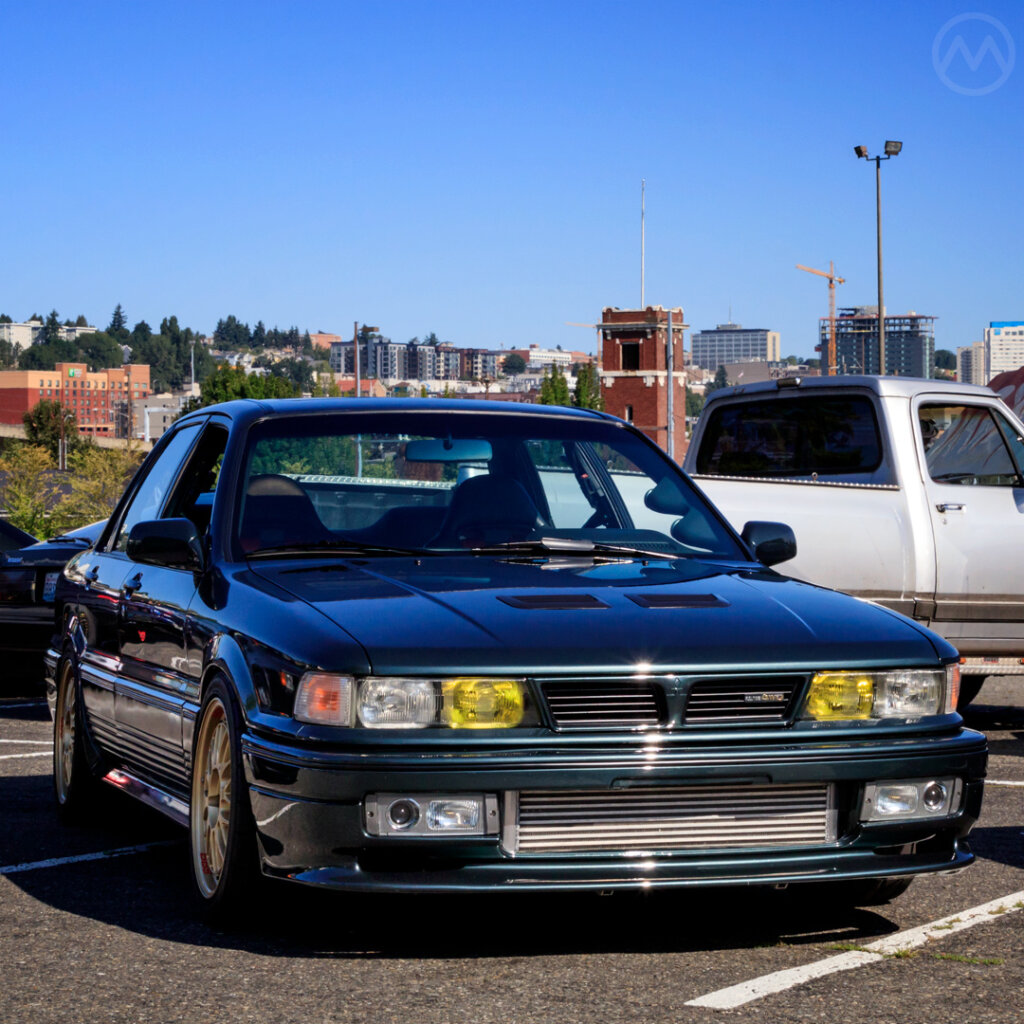
This generation had several different trim levels that varied in name from region to region, so to avoid giving us all a headache I won’t dive into that, instead I’ll summarize the different offerings.
Most configurations came with a naturally aspirated (check out my article about naturally aspirated engines!) 4G63 or some variation of that motor (4G32, 4G37, 4D65T, 4G67) mated to either a 4-speed automatic or 5-speed manual transmission. The exception here is the Galant VR-4 which was a performance model inspired by Mitsubishi’s rally division.
This model added a turbo to the 4G63, four-wheel drive (check out my article about drivetrains!), four-wheel steering and a ton of other performance goodies. The VR-4’s platform was later adopted to become the Lancer Evolution, which is why the VR-4 is often referred to as the Pre-Evo or Evo-Zero.
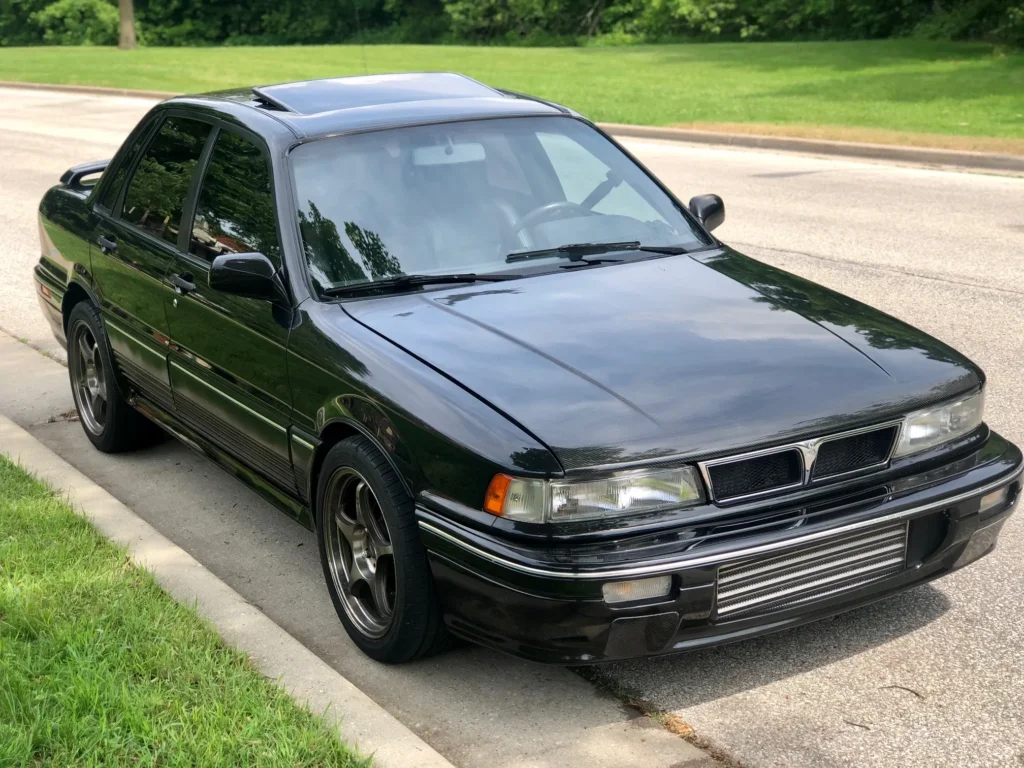
Oh, and one more thing I forgot to mention, the sixth generation Galant is the one AMG worked on to create the AMG Galant.
AMG As Independent Tuners
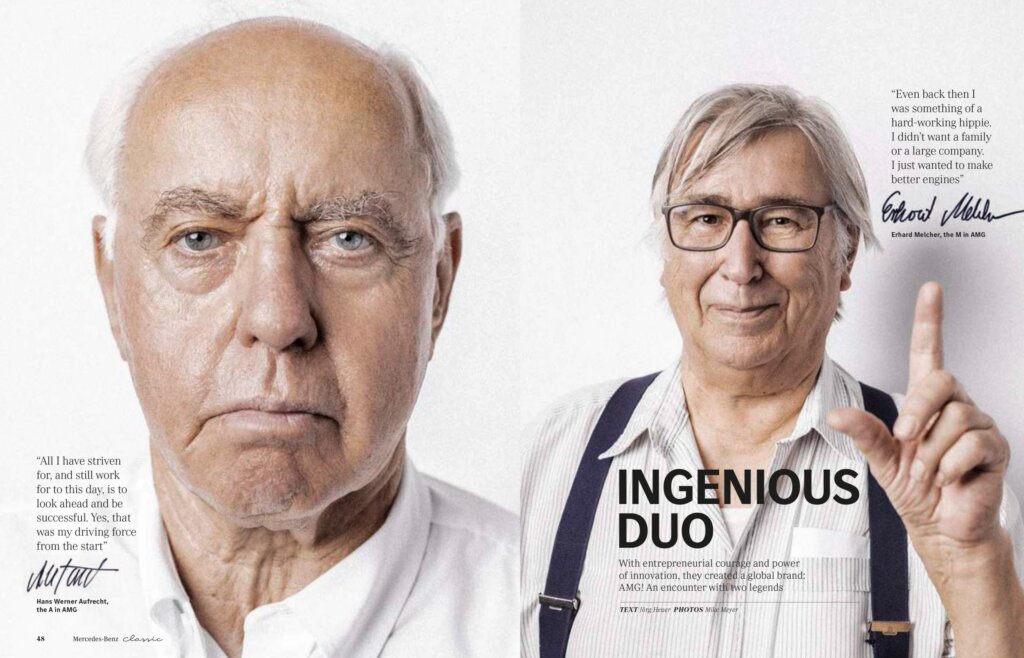
AMG was created in 1967 by two former Merecedes Benz engineers, Hans Werner Aufrecht and Erhard Melcher. AMG began as a racing engine manufacturing company and over time they slowly evolved into a tuner company.
Contrary to popular belief, AMG was not always partnered with Mercedes. It wasn’t until 1999 that Mercedes Benz would purchase a majority share of AMG and not until 2005 that Mercedes Benz would wholly own AMG.
So, between 1967 and 1999 AMG was free to collaborate with any company they chose. And over the years they did have some interesting collaborations, for example they worked with Honda to create the AMG Ballade/Civic (check out my article, YouTube video and TikTok about the AMG Ballade!). In the next section we’ll dive into another one of AMG’s interesting collaborations, this one with Mitsubishi.
The AMG Galant
In the late 1980s Mitsubishi begun to take performance engineering seriously. They had previous success in rally racing and wanted to rebrand themselves from a producer of economy cars to performance car manufacturer. This change would better allow them to compete with Nissan, Toyota and Mazda who had by this time already produced the legendary Skyline, Supra and RX-7 respectively.
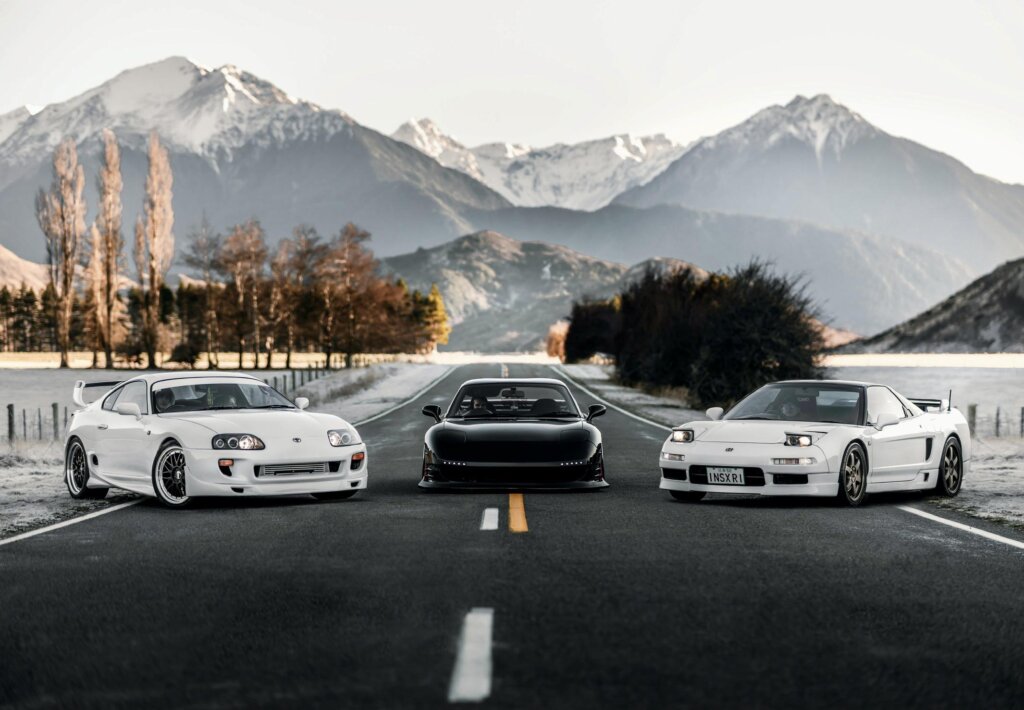
One of the first steps Mitsubishi took in this direction was the creation of their performance sub-brand, Ralliart. While this was a good start, Mitsubishi wanted to create a serious performance car immediately, but the young Ralliart wasn’t ready for that yet. So Mitsubishi decided to call in someone who was ready, enter AMG.
Some may be wondering why Mitsubishi would want a serious performance car built so badly even though they already had the Galant VR-4. The answer to that is that the VR-4 was rally inspired, whereas Mitsubishi wanted a pure performance car. Something that could compete with the Skyline, Supra and RX-7.
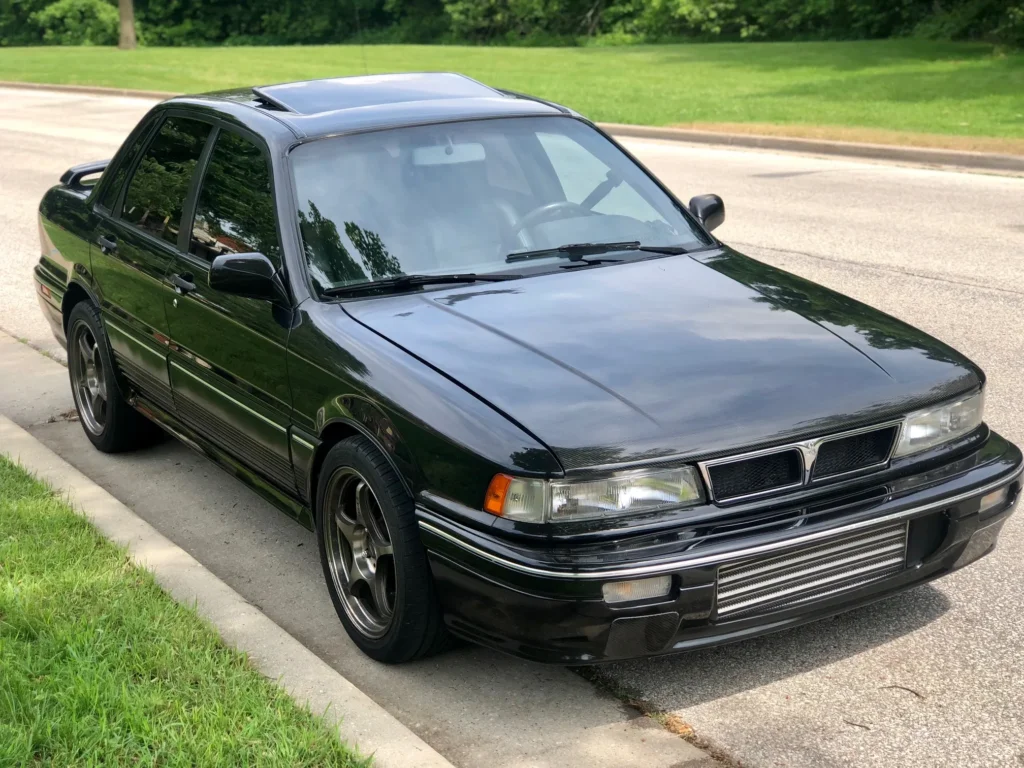
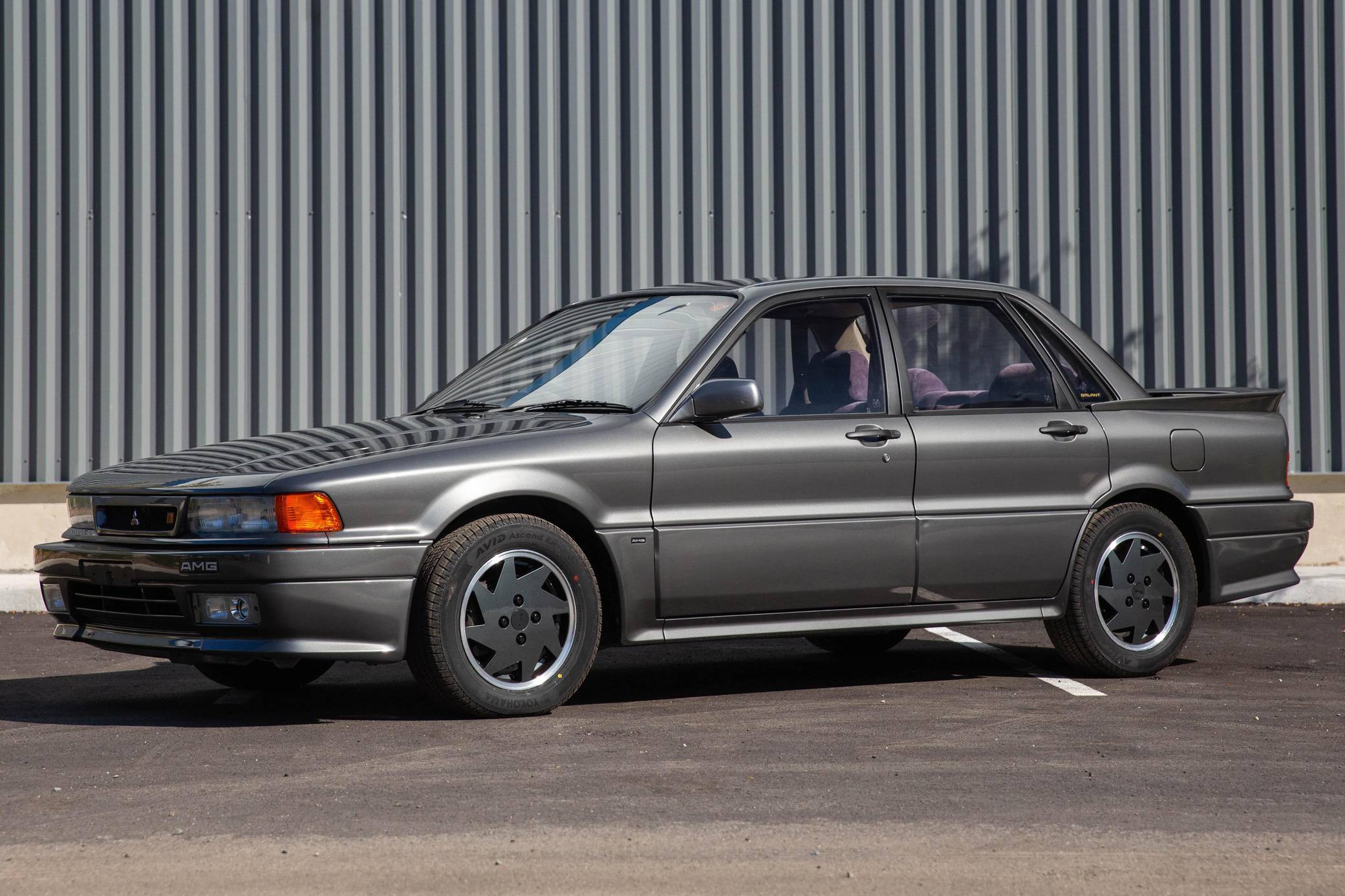
This formed another unique partnership in the automotive industry between Mitsubishi and AMG. Together they worked to produce the Galant AMG. This was an AMG modified version of the Galant GTi-16v, and AMG did quite a lot to this car.
There were two versions of the AMG Galant produced, Type 1 and Type 2. Type 1 was more performance focused while Type 2 was more luxury focused. Let’s start off by looking at the changes AMG made to the Galant that are common to both versions.
AMG added a ton of performance extras to the naturally aspirated 4G63 (check out my article about naturally aspirated engines!) that was present in Galant GTi-16v (more about why they didn’t go for the Turbo later). AMG added new pistons which raised the compression ratio from 9:1 to 10:4:1, piston oil jets, camshafts, titanium valve springs, rocker arms, exhaust manifold, exhaust system, Cyclone intake manifold and ECU.
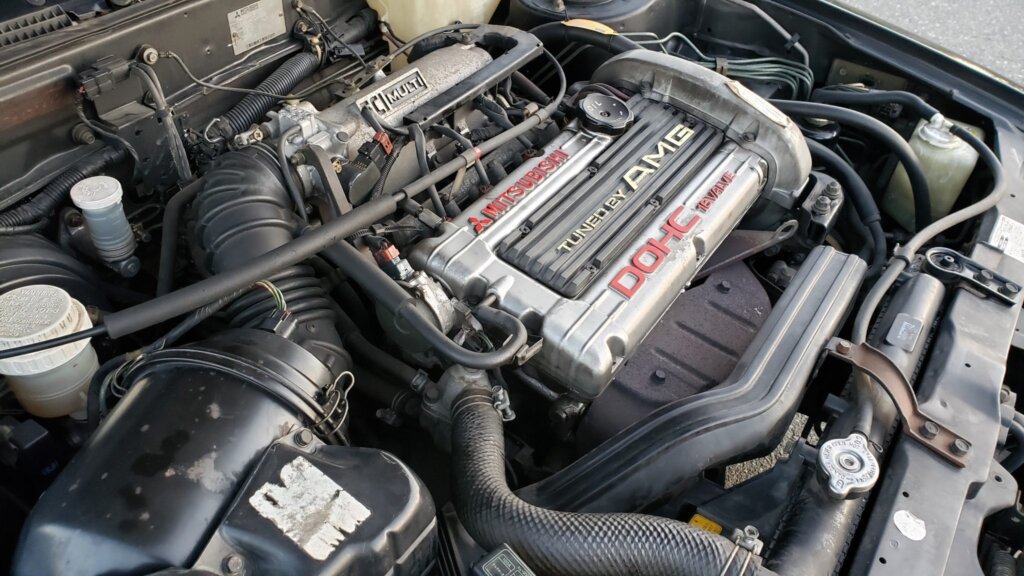
AMG also bumped the redline up to 8000 RPM which, when coupled with changes mentioned above, squeezed 168 horsepower out of the 4G63. This was a 27 horsepower increase over stock, AMG also managed to deliver this through a much nicer power curve as well. This is a very impressive feat for two main reasons, firstly this was achieved out of a 4 cylinder in the late 80s and, they did this without using any forced induction.
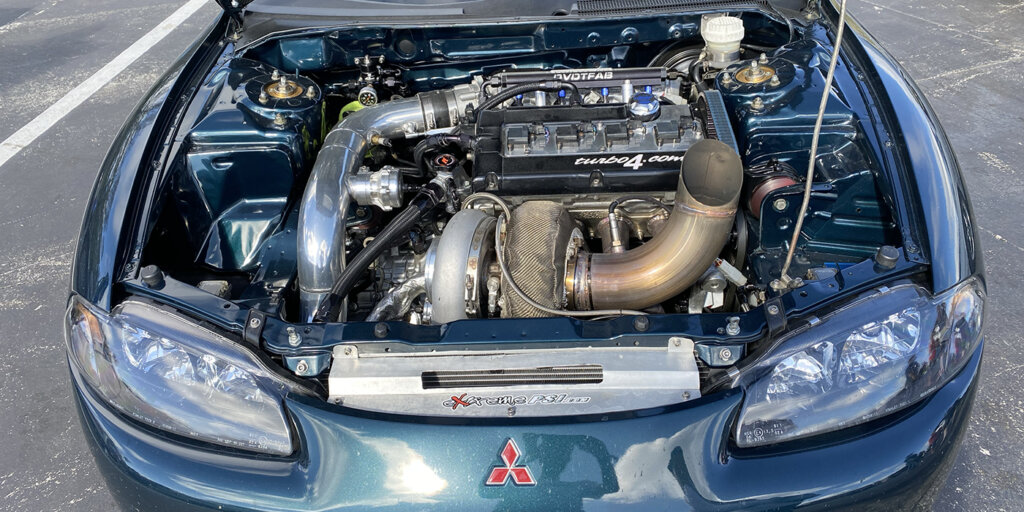
By this point you’re probably wondering why they didn’t just take the turbo 4G63 from the Galant VR-4, because that car was already released by the time the AMG Galant came out. The main reasons for this are that turbo lag was still a big problem and performance focused cars needed to have a very fast throttle response; and AMG had very little experience working with turbo motors at that point in time.
Both versions got a plethora of AMG badges added to their exteriors, an AMG body kit, 15-inch monoblock wheels, a two-tone paint job, an AMG wooden steering wheel and AMG designed seats. Now we can dive into the different options each version got.
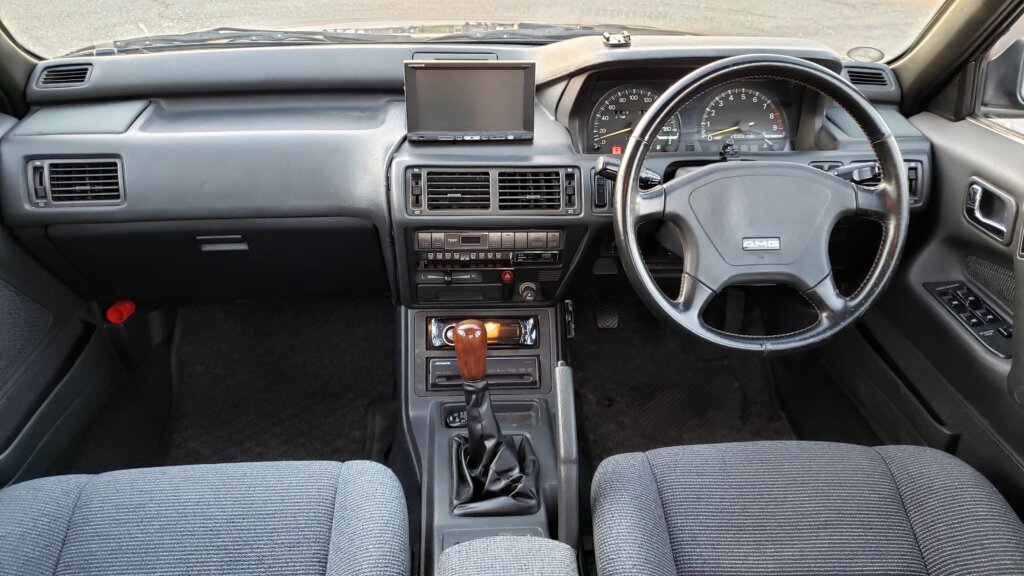
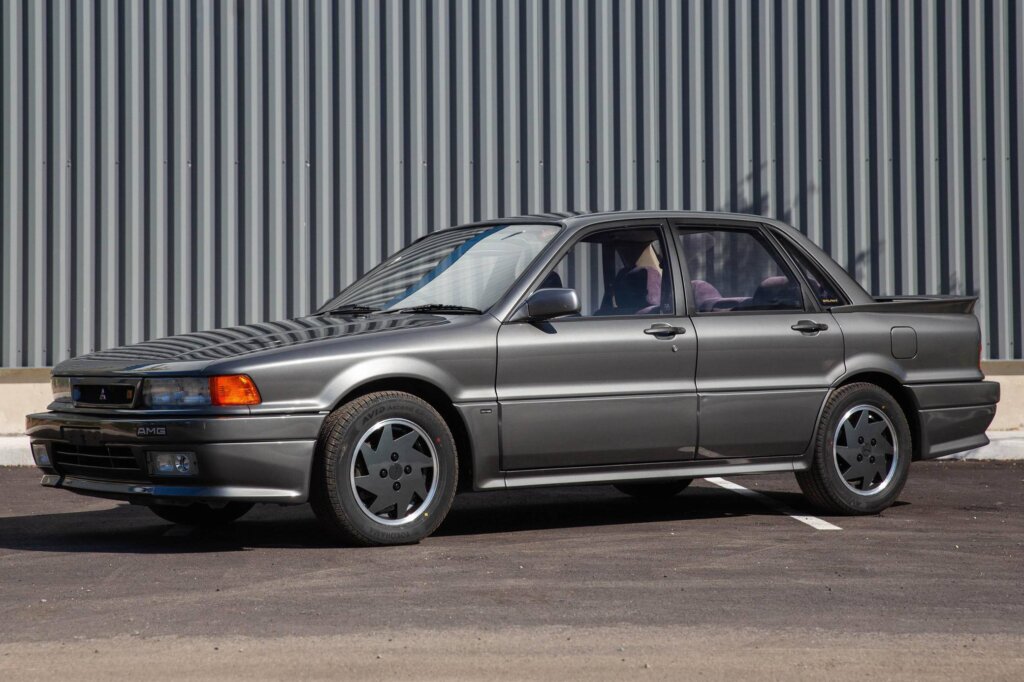
Type 1 being more performance focused got a 5-speed manual, sportier suspension, cloth seats, slightly larger wrap around spoiler, was 30 kg lighter and had a lower production number. Type 2 being more luxury focused got a 4-speed automatic, softer suspension, leather seats, was 30kg heavier and had higher production numbers.
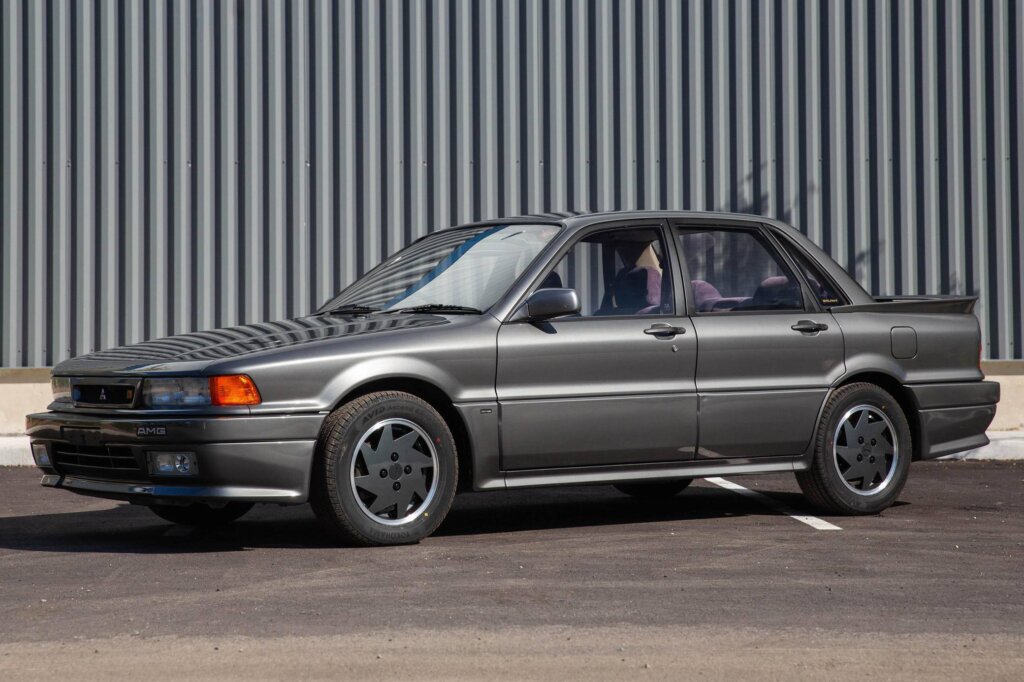
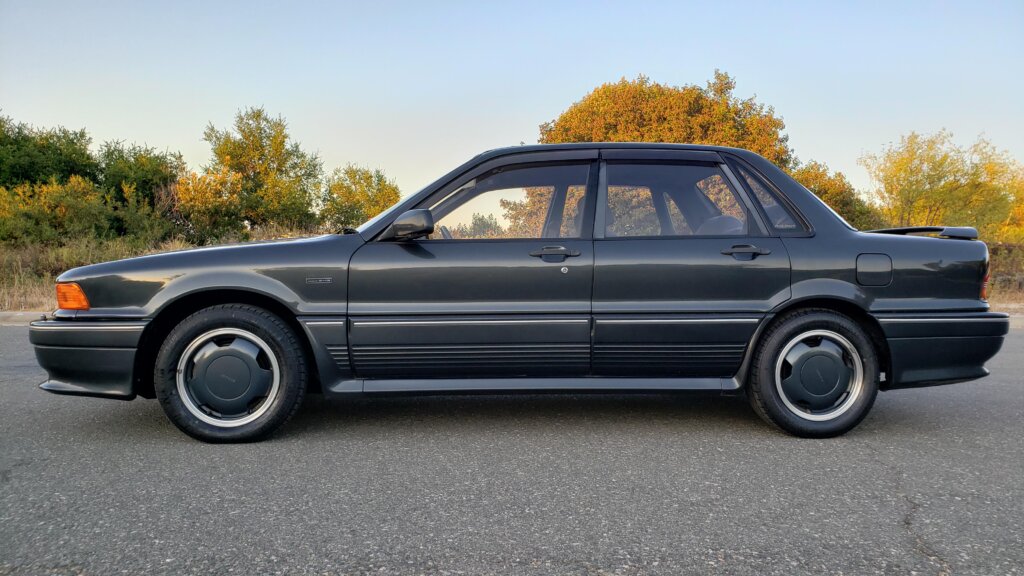
The AMG Galant was in production for 5 years and a total of 1395 units were produced (spanning both versions). Every single one of the production units were made and sold in Japan, which means they were all right-hand drive. Some people who want to drive them in other countries have swapped the AMG modified parts into the Galant GTi-16v so they could have a left-hand drive version of the AMG Galant. Kyle Lionis has made a video of one of these swaps that was done on a Galant in Manilla, since it is illegal to drive right hand drive cars there.
Conclusion
This is easily one of the most unique automotive collaborations I’ve had the pleasure of learning about. We have a Japanese brand that specialized in rally racing collaborating with a German born tuner company that specialized in making racing engines.
Perhaps I think the next most surprising point is that AMG opted to not work with the turbo 4G63 from the Galant VR-4. I’ve already said why they made this choice; I think the surprising part is how far turbo technology has come, and now nearly all of AMG’s engines are turbocharged.
Nonetheless the fact remains that this is one of the coolest automotive collaborations ever.
Sources: CarBuzz, CarThrottle, Doug Demuro, SharkBlue Media, Kyle Liong Cars, AutoSpeed, Wikipedia: Mitsubishi, Wikipedia: Mitsubishi Motors, Wikipedia: Mitsubishi Model A, Wikipedia: Mitsubishi Galant, Wikipedia: Mercedes AMG
Image Sources: Cars & Bids, The Drive, Engine Builder Magazine, Wikipedia, Old Motors, Bring a Trailer, Mike Meyer / Photography, Reddit, The Autopian